

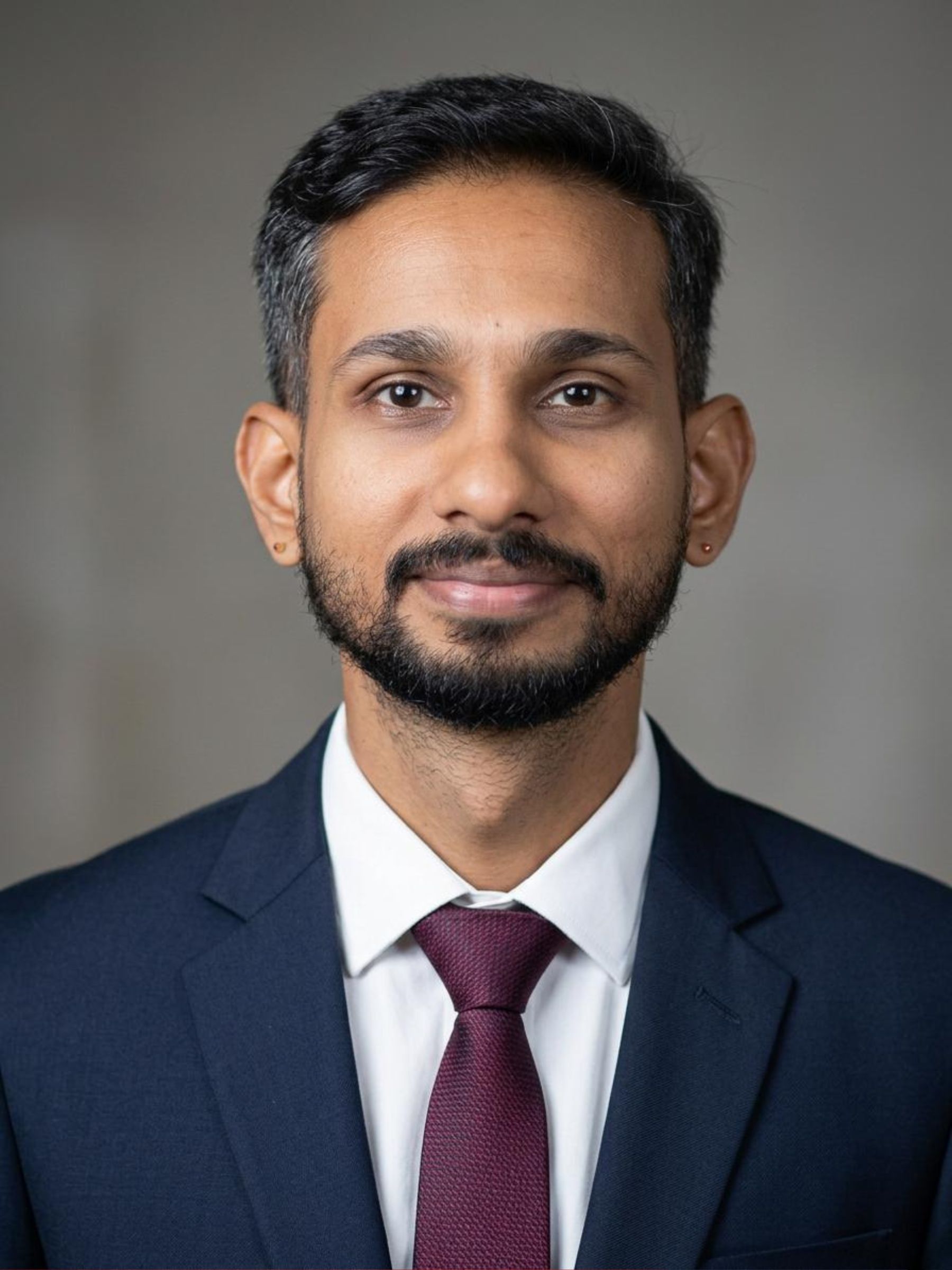
In early 2024 I was part of delivering new build dual-fuel methanol carrier Stena Progressive as Chief Engineer. After that delivery I stepped back from active sailing for a year. Not out of exhaustion - I needed the distance to actually see what I had been living inside for nearly two decades. Seafarers carry one set of problems. Ship managers carry another. Owners carry a third. Rarely does any of the three fully see what the other two are dealing with.
That year began at Isha Foundation, in Sadhanapada. The work there was inward, with no external outcome to chase. It taught me something I did not expect to need in business: if you are not settled inside, nothing you build outside holds together for long. External effectiveness follows internal balance, not the other way round.
From there I volunteered with Gramotsavam, where volunteers & rural communities across Bharat organise their own volleyball and throwball tournaments block by block, up to district and state level. Watching people with almost nothing in the way of infrastructure build something that coordinated and worked, entirely on their own initiative, changed how I thought about what is possible when local capability is unlocked rather than managed from above. A ship runs on the same principle: a crew that owns what it sees and acts on it, rather than waiting for instruction from shore, is a fundamentally more effective ship.
From there I volunteered with Gramotsavam, where volunteers & rural communities across Bharat organise their own volleyball and throwball tournaments block by block, up to district and state level. Watching people with almost nothing in the way of infrastructure build something that coordinated and worked, entirely on their own initiative, changed how I thought about what is possible when local capability is unlocked rather than managed from above. A ship runs on the same principle: a crew that owns what it sees and acts on it, rather than waiting for instruction from shore, is a fundamentally more effective ship.
Then came the moment that turned a set of instincts into a decision. Through the middle of 2025 I was part of the damage and repair assessment team, conducted by Stena Teknik, for Stena Immaculate at Great Yarmouth coordinating the tow, and the machinery preservation work that came with it. It was an eye-opener: how quickly things can go wrong, and spiral into something catastrophic, in such a short span of time. Partway through, insurers needed documentation, and we were scrambling piecing together what had actually happened from logbooks, emails and memory.
If this had been captured in real time, it would be transparent right now.
That thought followed me into six months as a Technical Superintendent supporting the Stena–Crowley JV fleet with Northern Marine. I watched breakdowns happen that could have been caught earlier. One vessel had water ingress into a main engine liner which, flagged sooner, would have stopped the damage from spreading. The data to catch it existed. It simply was not tracked in a way anyone could act on in time.
Not a data problem. A visibility problem.
Running underneath all of it, the Gen A Entrepreneurship Bootcamp the first cohort of a one-year programme envisioned by Sadhguru through the Sadhguru Academy, 26 intensive weekends from August 2025. Knowing what to build and knowing how to build a company that survives are not the same skill, and I did not want to learn the second one at a client’s expense.
I could have gone back to sea. Eighteen years is a hard thing to walk away from, and the plan to return was real. What decided it was a conversation with my colleague Ramanand Mabian: going back meant putting the same ceiling back over my own head the one I had spent a year learning to see past. If I wanted to grow, I had to stay in uncharted waters.
DSR Global Solutions exists because the gap I kept running into between what happens on a vessel and what shore can actually see is not a people problem. Seafarers, managers and owners all want the same thing: to catch what is going wrong before it becomes a crisis. What has been missing is the bridge between them.
That is what we are building.
Viraj V. Shetty
Founder · Develop · Sustain · Refine
